6/28/16 Show feat. Professor Alexander Ploss on Research in Infectious Diseases and It’s Global Importance

Featured image is that of an interactive map of vaccine-preventable disease outbreaks across the globe, created by the Council on Foreign Relations. You can find it, and explore it yourself, at this link.

In this installment of These Vibes Are Too Cosmic, we spoke with Dr. Alexander Ploss,
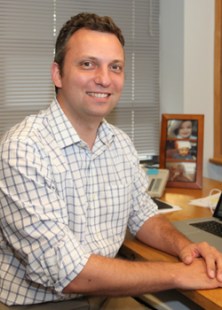
Dr. Alexander Ploss
Professor Alexander Ploss, Princeton University

professor in molecular biology here at Princeton. His research focuses on immune responses to human pathogens – specifically those infecting the liver, including hepatitis B and C viruses, yellow fever and dengue viruses and parasites causing malaria in humans. His group combines methods in tissue engineering, molecular virology and pathogenesis, and animal construction, to create and apply technologies to study human liver diseases caused by infectious diseases and if possible intervene in them. Specifically, he works to create “humanized mice” so we can study in lab mice diseases that typically only infect humans (and other very related species like great apes). In this interview, he discusses how his lab does this and the importance of this research.

I asked Professor Ploss to come speak with us because this topic of infectious diseases is incredibly important. Almost a quarter of the all human deaths worldwide occur due to infectious diseases. And, according to the WHO, in high-income countries like the United States, 7 in every 10 deaths are among people aged 70 years and older, and we perish primarily due to non-communicable diseases like cardiovascular diseases and cancer.
In contrast, in low-income countries nearly 4 in every 10 deaths are among children under 15 years, with only 2 in every 10 deaths are among people aged 70 years and older. In low income countries people predominantly die of infectious diseases like the ones studied by Professor Ploss.

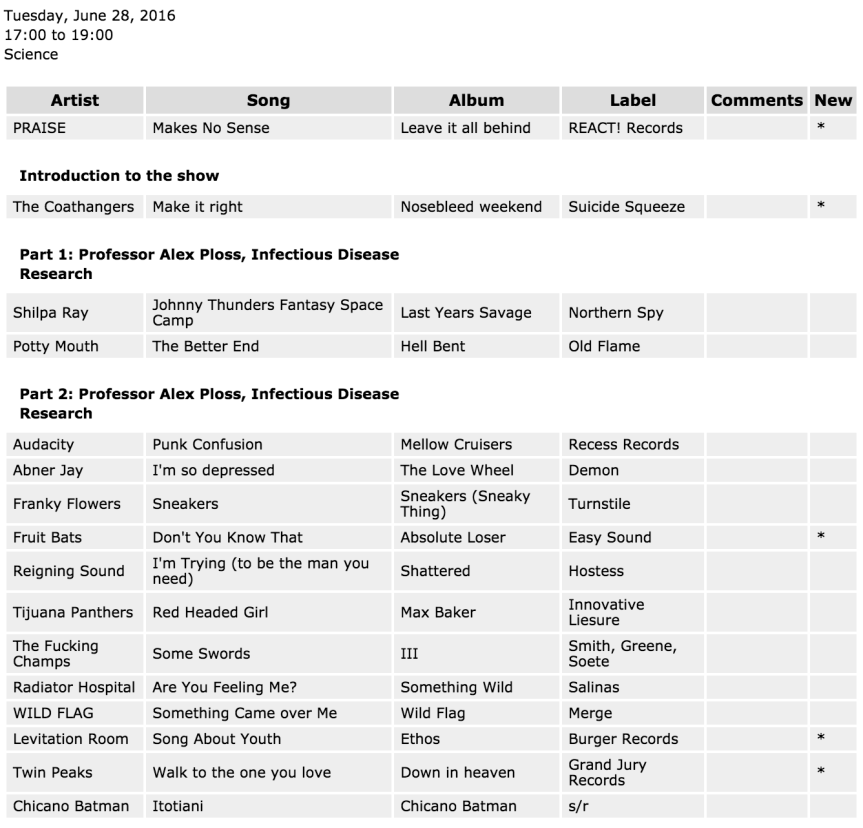
Take a listen.

Screen Shot 2016-06-29 at 9.19.20 PM

6/7/16 Show feat. Kabir Khanna on Political Psychology and Partisanship – Happy NJ Primary Voting Day

(Featured image above is from exeterstreethall.org.)

Today we discussed political psychology with Kabir Khanna, doctoral researcher in politics here at Princeton University. Kabir’s specialty is political psychology and public opinion.

kabirkhanna
Kabir Khanna, researcher in political psychology

We discuss both the polarized partisanship of elected officials, and how that compares to the electorate.  More specifically, Kabir explained that though it is clear that politicians have become more extreme on the liberal/conservative spectrum, we don’t quite know if the electorate as a whole has done the same – this is much harder to divine. Kabir discussed some methods of surveying the population to get a better handle on the truth of the situation. In fact, “the truth” and how to get there was much of our musings on today’s show.

This of course led us to discuss surveys, polls, and statistics. In particular, we discuss the details of some of Kabir’s work – which was featured in The New York Times’, The Upshot earlier this year. The work focused on how our opinion of the current state of the economy is affected by our politics, and how that affects our statement of factual pieces of information.

In this study, conducted with Kabir’s adviser Markus Prior and collaborator Gaurav Sood, they gave the participants a knowledge quiz and split them up in to three groups:

  1. group 1 was just given the quiz,
  2. group 2 was given the same quiz and told they’d get a dollar for every question they answered accurately, and
  3. group 3 again received the same quiz, but instead of getting a dollar for correct answers they were directly encouraged to be as accurate as possible.

The study found that “…[w]hen survey respondents were offered a small cash reward — a dollar or two — for producing a correct answer about the unemployment rate and other economic conditions, they were more likely to be accurate and less likely to produce an answer that fit their partisan biases.” (From the Upshot article, a very nice summary of this study and a complementary one by a group at Yale University.)

Towards the end of the show we play music by Kabir Khanna’s band, Gulps – a local New Brunswick punk band that Kabir drums for – and discuss their music a bit. (Check out their Facebook page for upcoming shows and news!)


We also mentioned a past show with chemist-and-crystal-maker, Quinn Gibson.


playlist - 6-7-16

5/31/16 Show feat. Professor David Spergel on His Research Spanning Astrophysical Scales


Featured image is of gravitational lensing in Hubble Deep Field images. See how there’s copies of galaxies and smudging. These distortions in the image are due to large massive astronomical masses between Earth and the galaxies being imaged. Photo credit: NASA

**Apologies to Professor Spergel and listeners for the poor sound quality in part 1 of the interview. We were having trouble with mics, but it was fixed for the remainder of the interview.**

wfirst_turnaround_web
Credit: NASA

In this installment of These Vibes Are Too Cosmic we interviewed Professor David Spergel, chair of the Astrophysical Sciences Department here at Princeton University, on his research. Professor Spergel has been awarded many accolades for his research including a MacArthur Fellowship (“Genius Grant”) in 2001, Nature’s Ten People Who Mattered in 2014, and the Heineman Prize in 2015. He is part of several scientific collaborations including the historic Wilkinson Anisotropy Probe (WMAP) satellite to map the cosmic microwave background, and currently the Atacama Cosmology Telescope and the Wide Field Infrared Survey Telescope (WFIRST).

Professor Spergel is known for having incredible depth and breadth of knowledge in astrophysics. In part 1, he takes us through his research spanning astronomical scales from planets to our entire universe. In part 2, we delve in to dark matter and energy, the strangeness of our universe, and the WFIRST satellite (Spergel is co-chair of the NASA science team). In the last part we answer a few listener questions which brings us to the risks involved in astronomy, the formation of our solar system (the planet Venus is weird, but it’s not a spaceship), and archeoastronomy.

Other mentions:


Playlist:

Introduction @ 12:24
Part 1 @ 20:37
Part 2 @44:56
Part 3 @ 1:20:39

Screen Shot 2016-06-01 at 10.22.10 AM

5/24/16 Show feat. Cameron Ellis on Consciousness and Cognitive Neuroscience, plus Ingrid Ockert Reviews “Making Nature”


In this installment of These Vibes, graduate researcher in cognitive neuroscience at Princeton University, Cameron Ellis, joined us in the studio to discuss his work on mental

Screen Shot 2016-05-24 at 10.25.47 PM
Cameron Ellis, Princeton University

processing as well as consciousness. In this three part interview Cameron details his research where he images the brains of infants, and what we can learn from it. Additionally, we pick apart what “consciousness” means, from both a scientific and philosophical point of view. We discuss the varying degrees of consciousness and how this relates to the consciousness of animals, like very intelligent animals such as ravens. And we discuss how this conversation can get sticky, particularly if one begins to equate intelligence with consciousness.

Further, Cameron mentions that consciousness wasn’t really studied scientifically until the 1990s, but since then there have been important milestones. For example, doctors are now better at determining the level of consciousness of an individual with “locked-in syndrome,” when someone is aware but cannot communicate verbally due to almost complete paralysis, and they can now make the patient’s time richer even in the face of the debilitating illness.

Cameron and I discussed so much, including his path to studying neuroscience and consciousness, partially by reading the book The Origin of Consciousness in the Breakdown of the Bicameral Mind, by Julian Jaynes. I encourage you to listen.

Then, past guest and doctoral candidate in science history, Ingrid Ockert returned to the studio to review the book Making “Nature”: The History of a Scientific Journal by Melinda Baldwin. She summarizes the book which focuses on the – you guessed it – history of the famous scientific journal Nature – how it began in the late 1800s as a popular science magazine and then developed in to a rigorous peer-reviewed journal. Many topics are explored in the book such as the fractured nature of science research in the 19th century due to, among other things, language barriers, and how pay walls limit peoples access to science and who can do science. We discuss this further and mention Neil Turok’s TED talk on the subject of the African Institute for Mathematical Sciences (AIMS), due to his detailing of the skewed nature of scientific research today away from, for example, African countries. Take a look:

Later, we bring this issue to today and discussed how scientific journals contain papers with research primarily funded by taxpayers’ money, yet are behind a paywall. This was discussed towards the end of a prior interview with immunologist Gloria Tavera, last semester.

At the end of Ingrid’s review, she leaves us with some interesting open questions and a few interesting companion books for further reading:

  1. Victorian Popularizers of Science: Designing Nature for New Audiences, by Bernard Lightman,
  2. Science for All: The Popularization of Science in Early Twentieth-Century Britain, by Peter Bowler, and
  3. Scientific Babel: How Science was Done Before and After Global English, by Michael Gordon.


Give it a listen.


Screen Shot 2016-05-24 at 10.19.46 PM

5/17/16 Show feat. Prof Julianne Dalcanton on New Souped-up Satellites + Science Writer Lizzie Wade

Credits for the featured image, above: NASA, ESA, J. Dalcanton, B.F. Williams, and L.C. Johnson (University of Washington), the PHAT team, and R. Gendler

In this installment of These Vibes, Astrophysics Professor Julianne Dalcanton (U. of Washington) joined us in the studio to talk about space telescopes – specifically two she’s

Julianne-Dalcanton_2101
Julianne Dalcanton, professor of astrophysics at the University of Washington

most psyched for: the just-proposed High-Definition Space Telescope, which would be “like the Hubble Space Telescope on steroids” (expected launch in ~2030) and the gorgeous feat of engineering that is the James Webb Space Telescope, to be launched in just a few years. We also got in to other exciting things like galaxies and exoplanets a bit.

Additionally, we talked about PHAT (actual acronym – I didn’t make this up), the Panachromatic Hubble Andromeda Treasury. For a period of time, Professor Dalcanton and some colleagues dominate the Hubble Space Telescope taking image after detailed image of our nearest galaxy, Andromeda. What came together was the most detailed images ever taken (for example, the featured image above), and they’re stunning:

Here’s another cool video for you. We discussed how the James Webb Space Telescope is going to essentially unfold after it’s launched, since it’s so large no existing shuttle can carry it to space. Here’s a really neat animation of how it’s supposed to go down.

And the aforementioned James Webb Space Telescope “selphie”:

JWST selphie
SHINY. 

Towards the end, we discussed life on other planets and how hard it is to look at the endless stars in the Andromeda Galaxy – only one of the countless galaxies in our universe – and not believe there’s more life-forms out there.

Later in the show (about an hour and 20 minutes in), Latin America correspondent for Science Magazine, Lizzie Wade, called in to the studio from Mexico City. We discussed her

LizzieWade
Lizzie Wade, Latin America correspondent for Science and freelance journalist, often writing for Wired

recent piece in Wired on how “Being Bilingual Changes the Architecture of Your Brain.” Lizzie discussed her own experiences becoming proficient in Spanish, as well as current science on the topic. She even touched a little bit on the ongoing debate on this topic (is bilingualism good for you? or neutral (neither good nor bad)?) as well as a bit of the shoddy history.

Last for the show, Wade told us a bit about two of her recent pieces on upheavals in the field of geology and some new findings on ancient stone tools in the Americas.

MUCH MOAR to see here:


playlist 5-17-16.png

5/3/16 Show feat. Cosmologist Colin Hill on the Universe as a Laboratory + Learning’s Physical Effect on the Brain

Featured image is of the Atacama Cosmology Telescope (of which Colin Hill is a collaborator) in the Atacama desert in Chile. Image credit: NASA

In this installment of These Vibes, cosmologist, musician and ex-WPRB DJ Colin Hill came in to the studio to chat with us about the cosmic microwave background (aka “the CMB”), using the early universe as a laboratory to probe fundamental physics, dark matter, and his Brooklyn-based band Memorial Gore.

colinhillColin walked us through his life as a theoretical astrophysicist that “lives close to the data,” and what that means. He explained how the Sunyaev-Zeldovich effect blurs the cosmic microwave background, and how that tells us about the matter distribution in the universe.
In part 2 of our interview we discussed what gravitational waves from the very early universe would do to the CMB: if theories are true, the gravitational waves would have imprinted a swirly polarization pattern in the radiation. Cosmologists are currently looking for this pattern (called “B-modes”), but there’s a big challenge. Dust – tiny particulates of carbon and silicon – in our galaxy can mimic this B-mode signal.  Continue reading “5/3/16 Show feat. Cosmologist Colin Hill on the Universe as a Laboratory + Learning’s Physical Effect on the Brain”

4/19/16 Show feat. Ksenia Nouril on art and science during the Cold War, plus the editors of Highwire Earth

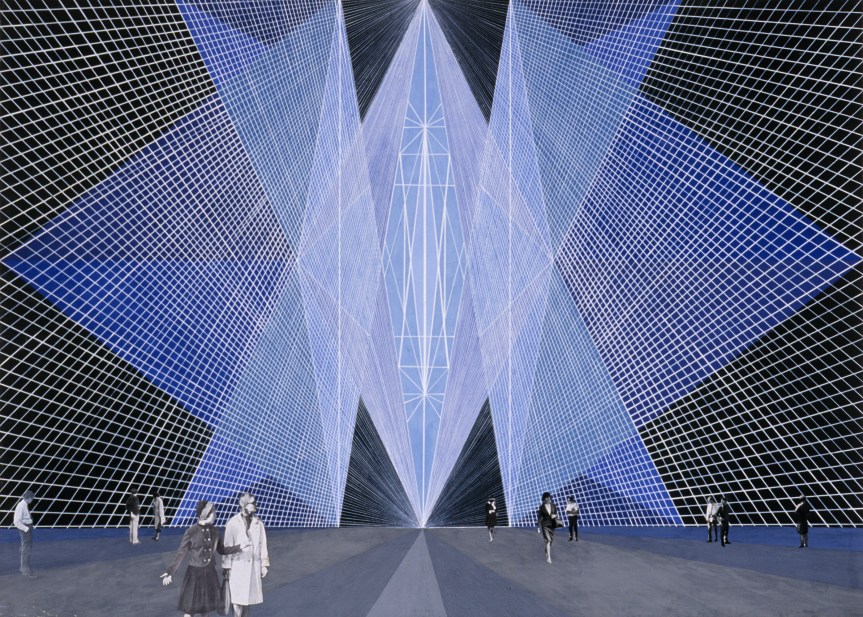
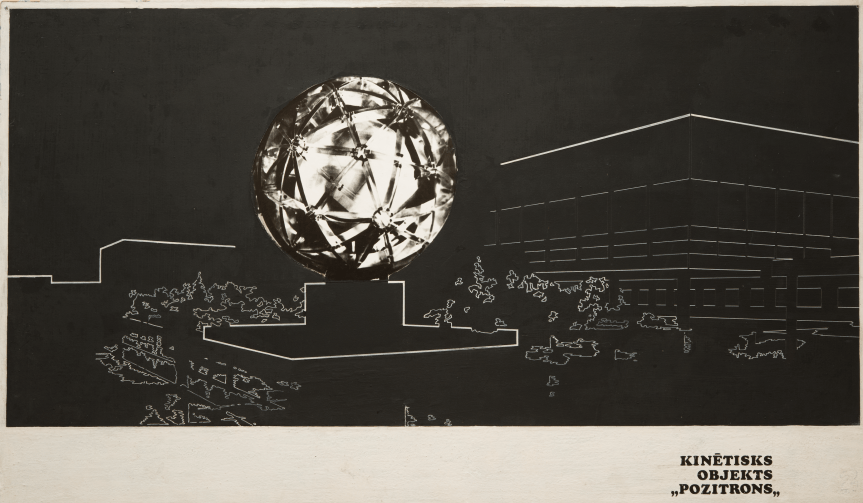
Featured Image: Valdis Celms. View of Positron, 1977. Ink and collaged photograph mounted on fiberboard. Zimmerli Art Museum, Norton and Nancy Dodge Collection of Nonconformist Art from the Soviet Union. © 2016 Artists Rights Society (ARS), New York / AKKA-LAA, Latvia. Photo Peter Jacobs

Last Tuesday was a wonderful, packed show. First we spoke to Ksenia Nouril, doctoral candidate in art history at Rutgers, New Brunswick, C-MAP Fellow at the Museum Of Modern Art in New York City, and Dodge Fellow at the Zimmerli Art Museum, also at Rutgers University.

Screen Shot 2016-04-20 at 9.41.20 PM
Ksenia Nouril. Credit: Sohl Lee

Furthermore, Ksenia is the curator of an excellent exhibit at the Zimmerli Art Museum that explores this topic, entitled Dreamworlds and Catastrophes, that will be up until July 31st, 2016 (free entry, information for visitors).

Throughout the first hour of the show Ksenia spoke to us on the intersections of art and science in Cold War Era Soviet Russia.

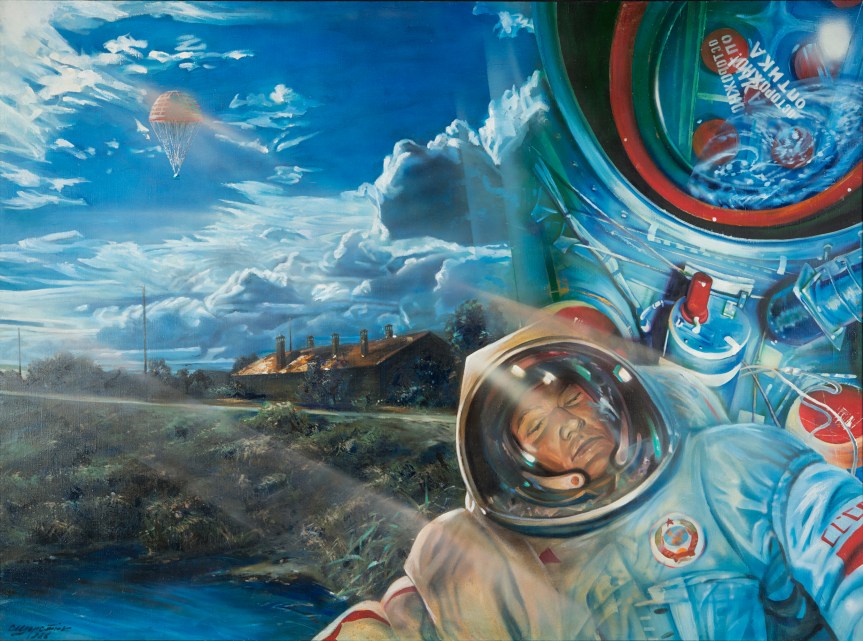
We discussed specific pieces like the Positron (featured image), and The Cosmonaut’s Dream.

Sherstiuk 1991
Sergei Sherstiuk (Russian, 1951-1998), The Cosmonaut’s Dream1986. Oil on canvas. Collection Zimmerli Art Museum at Rutgers. Norton and Nancy Dodge Collection of Nonconformist Art from the Soviet Union. Photo by Peter Jacobs 2014
Nussberg 2003
Lev Nussberg (Russian, born in Uzbekistan, 1937), Natalia Prokuratova (Russian, 1948). Altar for the Temple of the Spirit (Sketch for the creation of an altar at the Institute of Kinetics), 1969-70. Tempera and photocollage on paper. Gift of Dieter and Jutta Steiner. Collection Zimmerli Art Museum at Rutgers. Norton and Nancy Dodge Collection of Nonconformist Art from the Soviet Union. Photo by Jack Abraham 2006

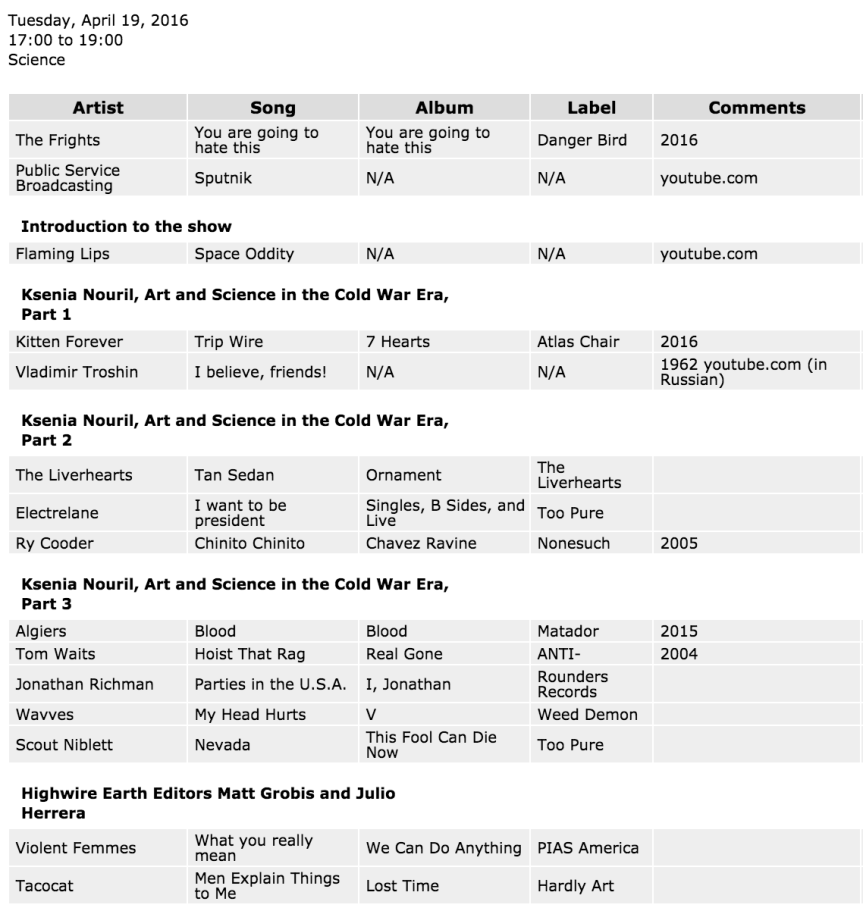
Further, Ksenia played and translated “I believe, friends!” by Vladimir Troshin (1962). In the video below he’s marching around Moscow, rousing listeners to exalt in the glory of the space race. Check it out:

Towards the end of the show Stevie spoke with the editors of the blog Highwire Earth, Julio Herrera Estrada (Co-Founder and Editor-in-Chief, doctoral candidate in the Environmental Engineering and Water Resources Program) and Matt Grobis (Co-Founder and Managing Editor, doctoral candidate in Ecology and Evolutionary Biology)**, which posts articles from Princeton researchers who’s work focuses on balancing human development and sustainability. From prison reform to sustainable land use, there’s a lot of interesting stuff already up on the site. We hope this will be only the beginning of an ongoing partnership between These Vibes and Highwire Earth.

**Two other founders and editorial staff members, Arvind Ravikumar (Co-Founder and Associate Editor) and Greta Shum (Co-Founder and Communications Director), were not in the studio due to space and availability.


Screen Shot 2016-04-20 at 9.52.45 PM

4/5/16 Show with Katerina Visnjic and Ingrid Ockert on Science Education Foundations and TV

In one of my favorite shows thus far, I discussed science education with one who practices it, and one who researches and documents the history of it. First, I spoke with Dr. Katerina Visnjic, senior lecturer in physics at Princeton University, and Ingrid Ockert, doctoral researcher in the history of science department. Ingrid’s research focuses on educational science television in the last century.

KatVisnjic
Dr. Katerina Visnjic
IngridOckert
Ingrid Ockert

With Dr. Visnjic we went in to the philosophy of teaching and various methods, both successful and not so much. We spoke about preparing for a physics education and what it means to see the world more scientifically – and more. Kat referenced and recommended the book The Art of Changing the Brain: Enriching the Practice of Teaching by Exploring the Biology of Learningby James Zull.


Dovetailing our conversation with Dr. Visnjic, Ingrid and I went in to her research on science educational television in the last century, beginning with the first program, the Johns Hopkins Science Review which aired from 1948 to 1955. Here’s a clip that aired in March 20th, 1951.

We discussed Watch Mr. Wizard! at length, like this clip from 1954:

Ingrid then took us through the years of science television and how they changed up to Carl Sagan’s Cosmos and today. Among several suggestions, she recommends Emily Graslie’s The Brain Scoop:


And so much music!

Screen Shot 2016-04-08 at 11.33.41 AM

3/22/16 Show feat. Lucianne Walkowicz on exoplanets, Brian on fusion rockets, and muchos music

For this show I decided to replay an interview recorded last December 2015 with the extremely intelligent and talented Lucianne Walkowicz. For LOTS of extra information on the interview, links to her TED talks, and information on her band DITCH CLUB, check out the original post on the interview. (Don’t be shy!) We talked about the Kepler telescope and how it finds exoplanets, tardigrades, and why some people think one star observed by Kepler (“Tabby’s star”) could be an alien megastructure – no joke.

Additionally, Brian and I chatted for a while (around 1.5 hours in) about the prospect of fusion rockets, and in particular developing them to shoot down apocalypse-inducing asteroids. Here’s a press release from NASA on developing fusion rockets.


Screen Shot 2016-03-25 at 4.16.43 PM

2/23/16 All-Vinyl Show feat. Nick Davy & Melda Sezen on Solar Cells, Wearable Circuits & Smart Glass (+ Making Vinyl)

Featured image above is from an article from 2013 where a group at Berkeley is working to make windows even smarter, in a different way.

Nick and Melda @ WPRBIn this special show for WPRB’s all-vinyl week, Brian covers the tunes and Stevie speaks to our guests, Princeton graduate researchers Nick Davy and Melda Sezen. It was beautiful chaos in the studio.
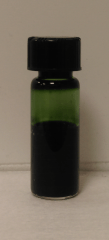
Nick and Melda work on Smart Windows, under Professor Lynn Loo in Chemical and Biological Engineering. “Smart Windows” refers to glass that can change colors (darken) when a current is applied. This happens due to the electrochromic (electro=electrical responding, chromic=color) material polyaniline. Polyaniline is magical. It dissolves in water, and is just green when no current is applied (see image), but when connected to an energy source, like a battery or a solar cell, it can be tuned to be varying shades of blue, and even transparent. Nick and Melda’s collaboration

Screen Shot 2016-02-24 at 10.28.15 AM
Poly-aniline.

works to improve this technology by introducing organic* solar cells as an extra varnish on the windows, producing both the energy needed to change the color of the glass and hopefully some excess to power your home, etc.

So, in the show we in to the nitty gritty of how smart glass works, and how Nick and MeldaBrian+vinyl.jpg are fabricating and improving the technology. We then dive in to other applications of organic solar cells and polyaniline, for example wearable technology.
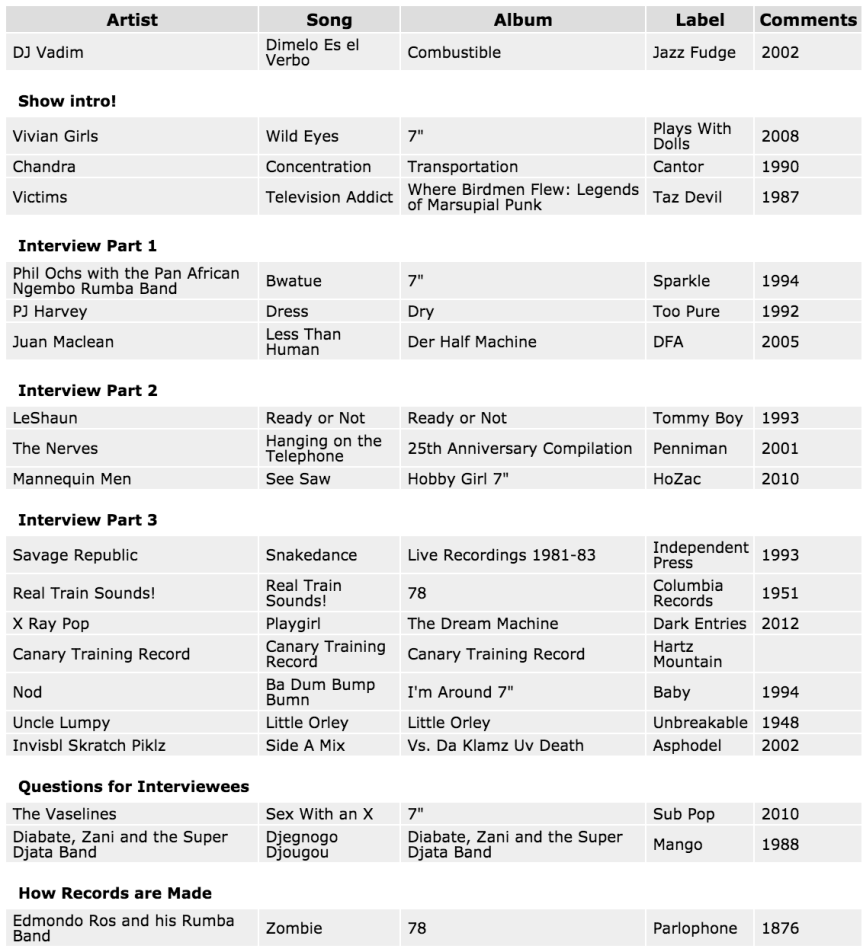
If you’re looking for something about smart windows that’s little higher level, take a look here.

At the very end of the show, Brian jumps on the mic to give us a little history of vinyl, including cylinder vinyl, and how LPs are made!

*In chemistry speak, “organic” = carbon based. In this case, think “plastic.”


Screen Shot 2016-02-24 at 10.25.09 AM