Featured image: HeLa cells, all derived from one human, being imaged with fluorescence. Proteins tagged with light-sensitive tails travel through the cell. (courtesy NIH)
This week, I’m happy to have interviewed Lian Zhu, a Princeton PhD candidate in Chemical and Biological Engineering. Her fascinating research on the cell’s nucleolus will bring us through the science of RNA creation and how cell parts can exist without membranes. She’ll explain how light can engineer cellular dynamics, and how she’s used this optogenetics technique to stiffen or loosen various proteins inside the cell nucleus–a feat which mimics the cell’s own formation and dissociation of globs inside the nucleus. Track proteins and affect their motion with light: it’s a hands-on way to look inside the cell! Her interview starts an hour into the track above.
As an added bonus, Lian shared this video of cells inside a worm egg dividing until they form a multicellular animal – and she’s seen this happen under a microscope with her own eyes.
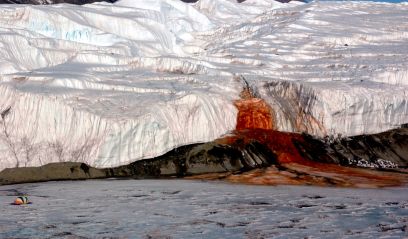
Preceding the main interview (0:40 on the recording), Harrison Blackman covers the rust-red Blood Falls, an Antarctic glacier whose bacteria produced a horror-movie set. Afterwards, we share science news about space telescopes and craters on Earth, and the whole show features music from all over the Middle East for flavor. Enjoy!
The crater that ended the dinosaurs’ reign is under study, and granite is way closer to the surface than expected–is it a sign of lava flows during asteroid impact?
The James Webb Space Telescope is built and ready for launch in 2018, finally ready to peer into new galaxies beyond the capabilities of Hubble.
A lake under Mars’ surface could be easily accessible standing water for us to investigate, and we only found it recently with orbiter radar!
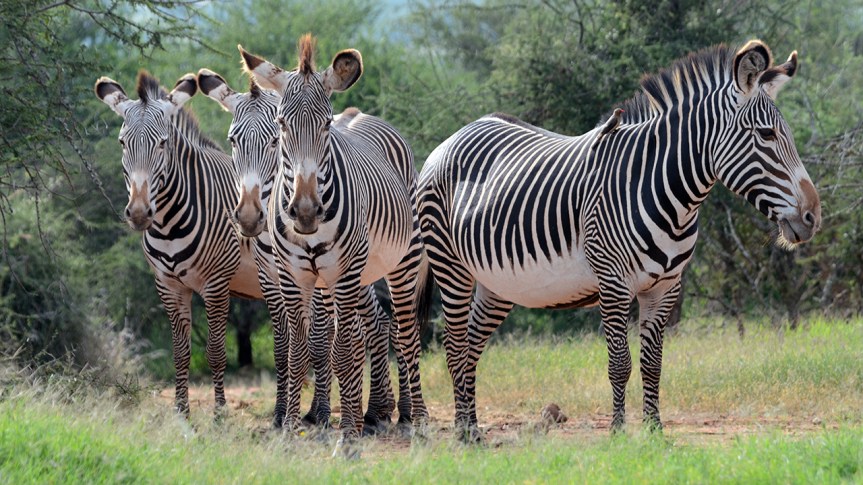
Featured image: A small group of Grevy’s zebras, which might remain together to avoid predators or split apart to find more food for themselves. (Courtesy M. F. Kinnaird)
Kaia Tombak of Princeton’s Ecology and Evolutionary Biology Department was on mic this week to share her expertise on collective behavior in animals. How are groups of animals structured? What environmental factors influence social flexibility in a herd? Kaia studies these questions about group dynamics where two species of zebras co-exist in the Kenyan
savannah, looking at the impact a few genetic differences have on collective behavior. Later, we discuss hierarchies in primate species: how egalitarian are male and female groups? All this, plus stories of running from elephants and a smattering of science news, can be found in this week’s show.
Check out the interview beginning an hour into the show above, and in the meantime here’s some relevant background:
Featured image: A high-pressure system over Tasmania, which pushes moist air away from a region and can cause droughts (even over the ocean!). (Courtesy NASA).
This week’s episode features Julio Herrera Estrada, Princeton PhD candidate in Civil and Environmental Engineering (his interview starts an hour into the show). As an expert on drought formation and prediction, Julio told us how to model long-term climate patterns and how interactions between land and air can lead to severe weather. Withstanding severe droughts requires connecting science and policy, so we explore what developed and developing countries can do to mitigate risks.
Additionally in this Election Day special, we spoke with Kathleen McCleery, visiting Ferris journalist, producer for PBS NewsHour, and WPRB alumnus on her understanding of this year’s US election. From demographics to the voracious news cycle that forgets as fast as we feed it, we pondered the influence that the media can have on the election and vice versa. You can hear it starting 30 minutes into the broadcast.
For other science news, check out the following links:
Perovskite solar cells promise to be cheap and efficient, thanks to nanomaterial engineering.
X-rays from the haze around Pluto might indicate a bigger atmosphere than we thought possible, and suggest that other dwarf planets might emit X-rays too.
Featured image: Protests in India about women’s rights have taken center stage in Western news recently, but mainstream media often emphasizes the louder news: aggression and war, instead of the peace process. (courtesy WBUR)
Thanks to guest Beena Sarwar, Pakistani media expert and visiting Ferris journalist at Princeton, for a deep look into why the media functions as it does. She speaks on how the personal is political in a repressive system, the media’s ideal role in society (and how its operation as a business corrupts this role), and the hypernationalism of nuclear proliferation in Southeast Asia. It’s stunning and entertaining stuff, so tune in starting about an hour in!
In the broadcast’s third hour, we jump to open source software and its values. Eugene Evans and Charles Swanson, plasma physics PhD candidates at Princeton, join us to talk about their own inventions with open source technology: homemade 3D printers, startups for VoIP systems, and more!
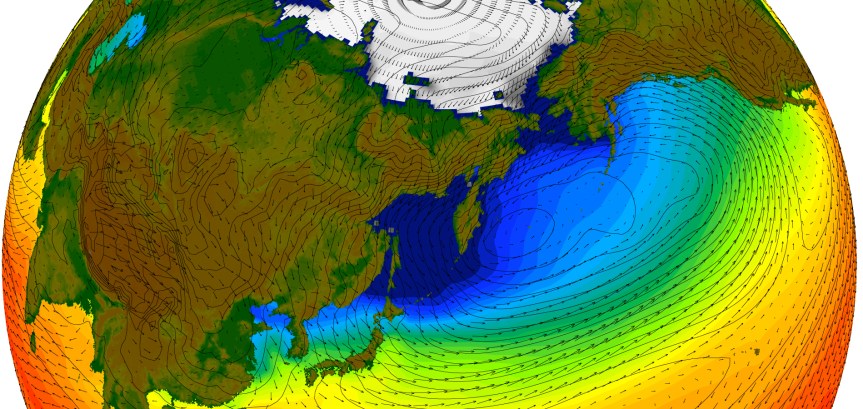
Featured image: A climate change model from Boulder, CO, predicting air flows and temperatures in a wide range of climate-change scenarios. (courtesy Atmos News)
Double interview on These Vibes tonight! We started the show with Matteo Ippoliti, Princeton graduate student in physics, who explained the Nobel-winning concepts of his academic advisor Duncan Haldane–all the way from spin arrays to quantum computing.
At 6:00, composer Erik Walker and climate prediction expert Bill Collins called in from San Francisco to cover their recent collaboration: the Climate Music Project. This joining of arts and sciences writes climate change into the pace of a composition. For example, temperature forces the piece’s tempo to change, increased solar radiation leads to distortion, and so forth. Hear the pair dive into climate modeling accuracy and the public’s reaction to their collaboration.
The whole show is dotted, of course, with science news and music of all kinds. Check out the resources below:
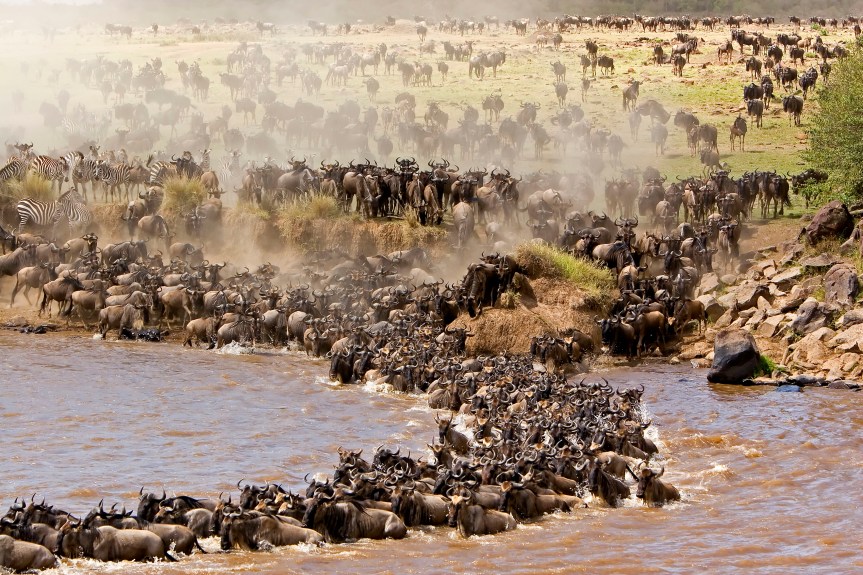
Featured Image: A wildebeest migration in Masai Mara National Park, Kenya. Shown are billions of the most pivotal parts of the grassland ecosystem: pathogens, thriving inside each animal.
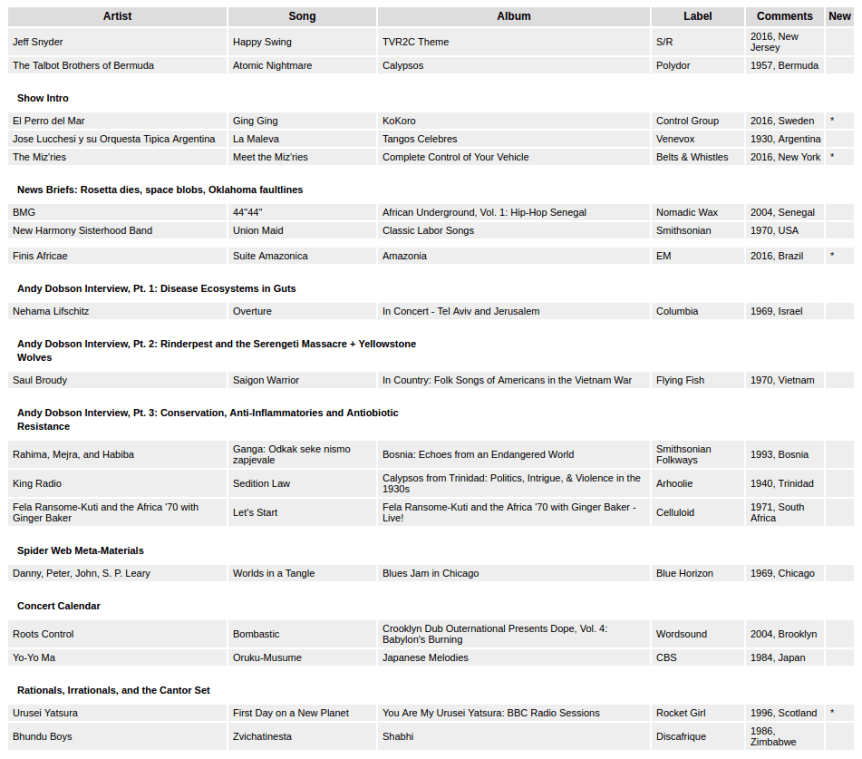
Today we hosted pathogen ecologist Dr. Andy Dobson, of Princeton’s Department of Ecology and Evolutionary Biology. As an expert on parasites all over the natural world, he studies everything from pathogen evolution to their drastic effects on ecosystems – and it blew our show away. We cover the detriment of a clean gut, how the rinderpest virus devastated the Serengeti, how tourists track wolves with mange, and the dangers of antibiotic resistance. Be prepared to reimagine the place of the invisible pathogen within every ecosystem. And, as always, we dish out some science news (Rosetta’s death, earthquakes in Oklahoma, and spiderweb metamaterials) alongside a brief discussion on rational numbers.
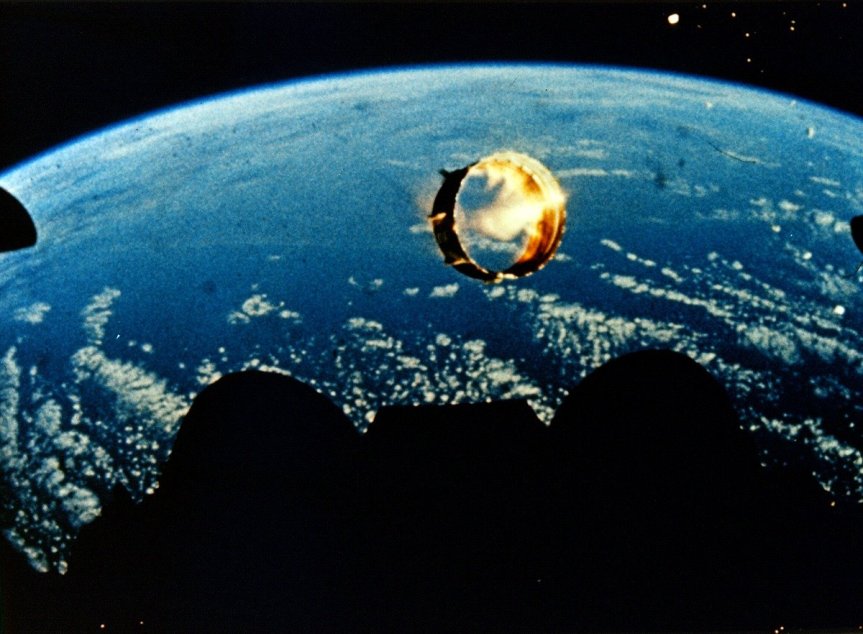
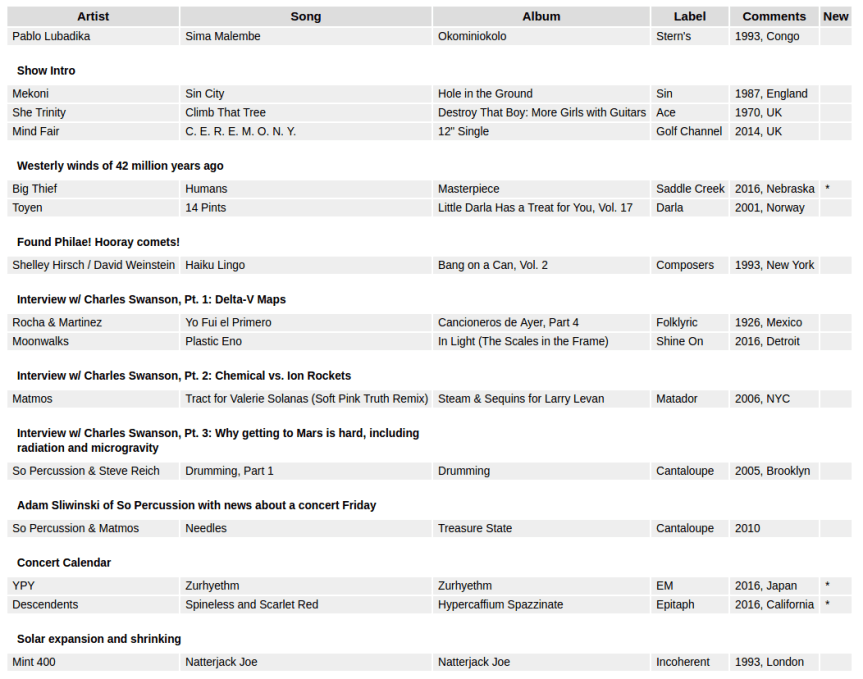
Featured image: The interstage of a Saturn V rocket falls into the Atlantic, detaching to save on mass and enable further travel in space. Taken on the Apollo 6 mission by NASA.
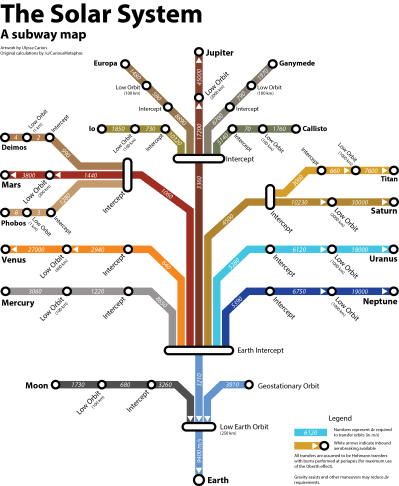
We welcome Charles Swanson, Princeton PhD candidate in plasma physics, back to the show for a journey into the science of rockets: how expensive is it to travel around our
A delta-V map for our solar system, indicating how big a rocket you’d need to go to any nearby planet.
solar system? What makes rockets with high exhaust velocity better than high-thrust rockets? How hard is it to go to Mars? Also featuring Adam Sliwinski of So Percussion on being an ensemble-in-residence and making music out of cacti, the westerly winds of ancient Tibet, and the life cycles of stars.
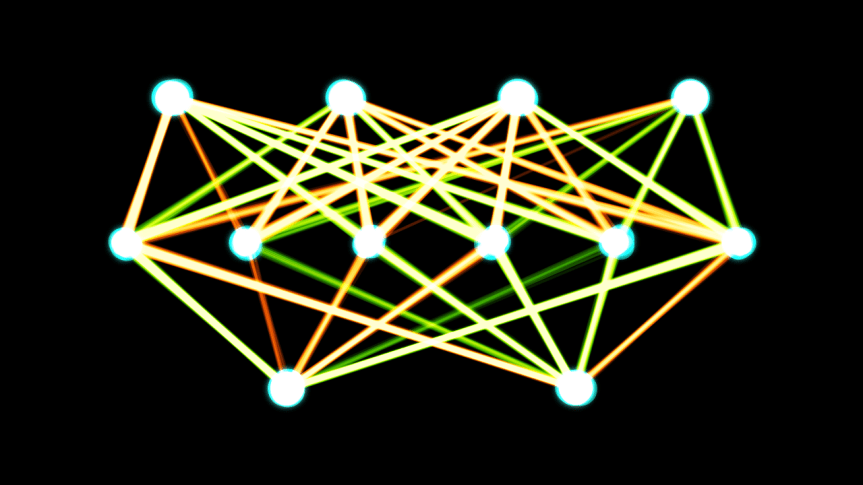
Featured Image: An artificial neural network, one of our best computational tools for uncovering the circuitry of our brains. Courtesy Wikimedia Commons.
We’re jam packed with science on WRPB this week! Olga Lositsky, graduate student in Princeton’s Neuroscience Institute, graced our show with her thorough understanding of today’s biggest research questions on the brain. We broke down her work on how we make decisions and store memories, which involves both computer models of neurons and psychological experiments. Later in the show, Stevie brings us details on Lucy’s demise and signals that probably aren’t from aliens–and Ingrid Ockert closes it out with her book review on engineers as activists.
Olga began studying neuroscience because its central questions unite other areas of science: psychology, philosophy, and biology come together once we learn how signals propagate around the brain. In fact, scientists categorize neuroscience research into levels of “abstraction.” At the most fundamental level, we can study the machinery of one neuron firing and affecting another; larger than that, we examine groups of neurons that make circuits for more complicated tasks; and finally, looking at the brain as a whole, researchers watch how signals travel from one part of the brain to another with tools like EEG or fMRI, giving a more global understanding. All of these levels pose questions differently, and they often use different terminology–but if we don’t understand each part alone, we’ll never grasp how groups of single neurons can make up a system as complicated as the human personality.
To connect these sub-fields of neuroscience, Olga uses computational modeling as an important tool. With machine learning techniques (which we’ve discussed on this show before), small units called nodes can pass information from layer to layer in a computer program. In the end, the program takes an input and provides an output, just like our brain sees some input and can think of some memory or move a muscle as an output. By changing the architecture of the neural network and observing its behavior, we get clues about what algorithms the brain uses to learn and remember.
Other technologies have been instrumental in unveiling the brain’s inner workings. Making better robots means programming them to learn, and the codes that artificial intelligence engineers use here have given insight into how the brain processes information. Robots make predictions about the way the world works and have to correct themselves when their predictions are wrong–and now, we think that dopamine might have something to do with the way our brain deals with our incorrect predictions.
In fact, the way we learn about general rules might be different than the way we learn about exceptions, or things about the world that surprise us. Some scientists are postulating that we connect these two ways of learning through sleep. For example, learning about birds that can’t fly (like penguins and ostriches) shouldn’t interfere with our understanding that most birds do fly–and maybe sleeping helps us reconcile these exceptions to the rule. But Olga emphasizes that we’re still only developing these ideas, and the new field of neuroscience has a long way to go until we answer these questions definitively.
Mice need sleep too to form memories, as this study from University of Pennsylvania finds.
One fundamental area that we need to learn more about, Olga points out, is exactly what happens within a single neuron when we learn. Maybe storing a memory is more than just building connections between neurons; it might also change the structure of each neuron individually. Such a new idea could have a huge impact on how we simulate the brain on a computer.
In the second half of the interview, we pick apart a few dramatic ideas that are being debated in neuroscience today. Firstly: Why do we make bad decisions? Whether it’s eating another candy bar or refusing to do our homework, humans might seem wired to choose in ways that harm ourselves in the long run. In fact, though, there’s a better question to ask that can tell us why we choose these self-defeating things. Evolutionarily, why might it be optimal for us to make this “bad” choice? For example, a candy bar might have been a great way for a starving hunter-gatherer to shore up calories for the winter; avoiding homework might allow us to go on an adventure and learn about the world. There are evolutionary reasons why we make decisions we ought not to, which can help us understand them.
Secondly, we all know that neurons that “fire together wire together;” that is, the connection between two neurons strengthens as they get used simultaneously. Actually, this might not always be the case. Olga describes how subliminal reminders that fire neurons weakly might actually weaken the connection between them, basically helping you to forget. Again, this is new and preliminary research, but it makes us consider an even more complicated picture of the brain.
Finally, how do we estimate how much time passed between two events? One of Olga’s recent studies tested this question by having test subjects guess how long a radio story took to listen to. It turns out, the more events happened between two parts of a story, the more time people guessed that part of the story took. The difference between perception and reality was sometimes huge, with some estimating as much as five minutes too long (on an interval of only three minutes!).
Thanks to Olga for the coherent and descriptive interview! It’s really clear to me how much insight we have about the brain now, even if neuroscience has a long way to go before we get to concrete psychological answers.
Afterwards, Stevie comes on to clear up two science news stories. A recent finding from the University of Texans examines the death of Lucy, our oldest ancestor found in 1974. By using X-rays and forensic techniques on Lucy’s skeleton, they could tell precisely the injuries that ended her prehistoric life: falling from a tree and hitting the ground at 35 miles per hour. Ironically, the very skills we thank Lucy’s species for developing, walking on the ground and not in trees, may have made them less adept at climbing (and more likely to succumb by gravity).
The second story, spreading around the internet like wildfire, concerns a recent signal from a Russian Academy of Science telescope. The signal comes from nearby, only 95 light years away, and some claim it could come from an extraterrestrial civilization. But it’s wise to wait for more facts to come in: SETI is only just opening their investigation, and there’s a lot of reasons that this signal is probably a false alarm. For one, seeing a signal once is a lot more indicative of a malfunctioning satellite than a repeated broadcast by aliens. More than likely, this is just one more reason to remain skeptical of most things you read on the internet.
As a great show-closer, Ingrid Ockert returns to our show for yet another book review. This time, she brings us Engineers for Change, an investigation by Matthew Wisnioski into the changing perception of engineering over the 1960s. Even today, we often think of the engineer as a cog in the machine–more at home designing missile silos than solving climate change. But various groups of engineers have tried changing this image for the better over time. Even at Princeton, over a thousand students led by Engineering professor Steven Slaby protested University research for weapons in the Vietnam War. For more information on collaborations between engineering and art, Patrick McCray’s blog Leaping Robot has put out some great articles recently. As always, thanks to Ingrid for coming on the show, and especially for bringing us another alternative look into the perception of science and technology over the past few decades.
Featured image: A tomato hornworm being devoured, “casually,” by wasp larvae in their cocoons. Courtesy Wikimedia Foundation and the penultimate chapter of Miss Jane.
We were fortunate this week to air a phenomenal interview with author Brad Watson, Professor of Creative Writing at University of Wyoming and acclaimed novelist with two short-story collections and two books. His newest work, Miss Jane, just came out in July 2016, so we took the opportunity to ask Brad about the writing process and how he came to think of the world from Jane’s perspective. The conversation meanders through questions of gender identity, nature and Southernness, and feeling like the odd one out–it’s a thoroughly fascinating talk, so listen to the audio above and don’t just take my word for it.
The novel centers around Jane Chisolm, born on a cattle farm in 1915 Mississippi. From her first hours, Jane is defined by a birth defect: it leaves her incontinent and incapable of sex. Modern surgical technology could remedy a condition like this immediately. But in her day and age, Jane is left without recourse. The novel captures its heroine’s full arc, and over its course Brad explores the many consequences of Jane’s affliction.
A character like Jane is hard to relate to, especially for an author writing a century later with little to go off of but a childhood in the South. The story’s inspiration comes through a great-aunt, a mysterious figure that Brad only met once and knew mostly through old photos. Because of the lack of information, the novel took 13 years to write, only beginning seriously in 2013 when Brad connected his great-aunt’s story with a plausible medical condition that made her feel more concrete.
Even then, Brad couldn’t get a good look at who Jane might have been as a person without developing the story’s supporting characters. A small cast of dynamic personalities, including Jane’s nuclear family and the doctor that treats her, bolster the novel and give Brad different lenses into seeing Jane. He makes a point that characters shouldn’t be written into a story unless they help the reader understand the protagonist–and in this sparse collection of characters, Brad’s writing makes everyone seem like a piece of the puzzle, not just illuminating Jane but giving shape to the novel’s central conundrums.
The writing stands out for its perceptive descriptions of the natural world. Jane finds solace in the Southern forest near her home, where Brad remarks that everything is strange if you look hard enough: from mushrooms in the soil to fish that sift water through their gills to breathe. To a character that feels like an outsider in the human world, the oddities of wilderness are a comfort.
We talk a while about the strangeness of the South, too. It’s a place Brad doesn’t think
“Meditating” : Evocative pencil artwork from Mary Jane Parker, another artist focusing on nature and the South.
he’ll be able to get over, even now that he lives in Wyoming and only visits his childhood home occasionally. More than anywhere else in the US, the South maintains its own mentality, and the roots of it are deeply twisted around a history that Southerners spend their lives trying to process. Brad doubts he can stop writing about the region, since he has such a backlog of stories it has inspired.
On my mind as I read Miss Jane was the plot’s intricate connections with the American dialogue on gender identity. Brad clarifies that he began the novel years before this debate became mainstream, though he did wonder about Jane’s possible intersexuality in the course of defining her as a character. In the end, he writes Jane as a heterosexual female–which is fitting for the times, since 1920s Mississippian culture had no notion of the gender spectrum. Still, the foil between Miss Jane and our modern conversation is an important one, since Jane’s life was severely affected by a lack of medical technology that nowadays gives us the power to perform, say, sex reassignment surgeries.
I can’t recommend this book highly enough–not only is it an entertaining and beautiful read, but the wholeness which Brad builds into his characters is obvious from the start. For more information on the rest of his book tour or on Miss Jane, visit Brad’s website here.
Our show-closer comes from a listener who asked, semi-seriously, if the grass is truly always greener on the other side. Semi-seriously, we answer: the phrase came first from the Billy Jones tune above. Statistically, of course, your grass is probably about as green as everyone else’s, but Stevie brings us back to the real meaning of the phrase (comparing your well-being to others) and how it might explain Trump supporters.
Featured image: NASA’s Dawn mission, currently orbiting its second destination in the Asteroid Belt, is equipped with an ion thruster to boost its efficiency and make visiting multiple bodies possible. Courtesy NASA’s JPL.
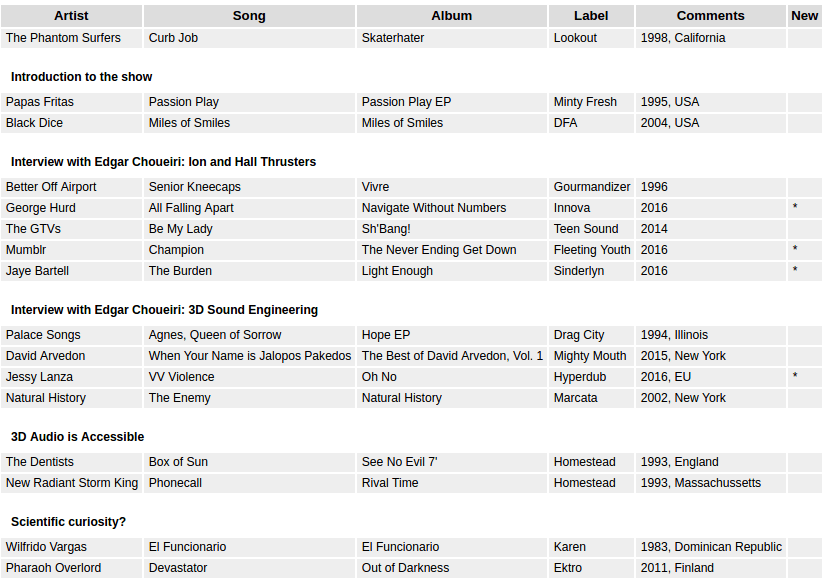
Dr. Edgar Choueiri of Princeton’s Mechanical and Aerospace Engineering is on the air this week, and he brings his innovative physics applications to our conversation. Hear all about the dramatic Hall thruster technology as a method of space propulsion, and then get blown away by the idea of virtual-reality 3D sound. Throughout the interview, I had the feeling that science fiction was coming to life out of Edgar’s research, so check out the full recording to be really amazed at where technology is headed.
A Saturn Five rocket lifts off (from NASA).
Edgar began his work at Princeton researching space propulsion. For many years, we’ve had a solution to this problem: chemical thrusters, which burn massive amounts of fuel to blast rockets up into space. However, it’s clear that this method is horribly inefficient. Just look at a typical Saturn 5 rocket, where a tiny payload sits on a massive container of fuel. All chemical thrusters work this way, since the amount of rocket fuel needed to lift a load out of Earth’s gravity is about ten times the mass of the load. Since combustion ejects particles at a particular speed of a few kilometers per second, we’re stuck with this inefficiency as long as we burn chemicals to get into space.
The most obvious way to improve this picture is by forcing particles out of a spaceship at higher speeds. We can achieve this acceleration by propelling the rocket with plasma, a charged gas that responds to electric fields. By making an electric field–which is easy to do with some solar panels and a metal grid–the spacecraft ejects plasma at any speed we like, which can drastically improve the thrust efficiency. Edgar makes an analogy of driving across the country: a chemical rocket is so inefficient that you need to stop for gas tens of times between New York and California, whereas a plasma thruster would let you go the whole way without refueling.
A Hall thruster on display from U. Michigan’s PEPL.
In some ways, we’re stuck with chemical rockets, because plasma engines aren’t good enough to get us out of Earth’s atmosphere. But once a spacecraft is in orbit, Edgar’s thrusters make the next steps cheaper and quicker. For example, a trip to Mars might take nine months with chemical fuel, but only three months with plasma fuel.
Edgar has seen a lot of progress in implementing these new technologies over the years. When he began graduate school, ion thrusters were science fiction; now they’re used widely by NASA and private companies. A newer design, the Hall thruster, uses clever arrangements of electromagnetic fields to keep particles confined and boost efficiency. And as Edgar’s group improves the Hall thruster design, it’s also seeing more use in space–perhaps an explosion in their use is coming, as Edgar hints at by mentioning SpaceX’s interest in the technology.
Aside from space propulsion, Edgar has another specialty that’s seeded a second laboratory at Princeton: 3D audio engineering. When we hear sounds, our brains can pinpoint their origin beneath our conscious awareness. An airplane overhead, a voice behind us… we could point to a sound’s source even if our eyes were closed. Unfortunately, reproduced sound from speakers or headphones has lost this spatial signature. To Edgar, hearing the breadth of a symphony confined to the location of a speaker isn’t authentic. That’s why he’s working to restore three-dimensionality to recorded audio.
Our ears can find a sound’s source from three cues. The first is the small delay between sounds reaching your right ear and your left ear, or the inter-aural time difference. Second is the loudness of sound in one ear compared to the other, or the inter-aural level difference. Lastly, the specific shape of your earlobes funnels sounds to your eardrums, and this personalized filter lets our brain know whether a sound is near or far, above or below.
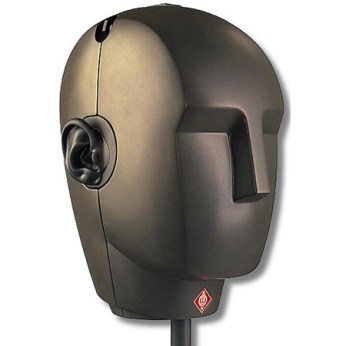
A simple way to record in 3D: use a dummy head. From Hooke Audio.
Since the 1960s, we’ve mastered the first two cues, typically by recording sounds from two microphones on the sides of a dummy head. In fact, these “binaural” recordings are enough for about a third of the population: the inter-aural time difference and inter-aural level difference will convince them that sounds are happening in 3D. For the rest of us, though, the unique shapes of our own ears affects our spatial perception of sound. Making a recording that everyone will perceive as truly 3D means we need to record audio specially for each pair of ears. Further, your brain expects sound to move from right to left when we shake our heads: but recordings don’t move along with you. So, there are a lot of obstacles to perfecting 3D audio for everyone.
Edgar’s group is fighting off these remaining problems one at a time. One of his students, Joseph Tylka, makes facial recognition software to track head movements and modify audio playback in real time, so that the 3D experience is uninterrupted when you shift around. Another student, Rahulram Sridhar, is developing a method to tune 3D audio to your earlobes with quick image analysis. Finally, the group is working on sound wave cancellation, so that different areas in space would receive completely different soundwaves from the same set of speakers.
All this innovation sounds far fetched, but these projects are moving along quickly–and Edgar foresees a lot of short-term applications. Imagine four friends sitting in a car, all listening to the same sound system but all hearing different tracks individualized to their ears. Everyone can navigate through a virtual 3D sound field, listening to hyperrealistic concerts from the mezzanine or from behind the stage according to their wishes. If Dr. Choueiri’s lab succeeds, we could have sound systems like this in the very near future.
For more information on present-day technology for 3D sound, check out Jambox and LiveAudio, which Dr. Choueiri demonstrates during the interview.











 As a great show-closer, Ingrid Ockert returns to our show for yet another book review. This time, she brings us

 The novel centers around Jane Chisolm, born on a cattle farm in 1915 Mississippi. From her first hours, Jane is defined by a birth defect: it leaves her incontinent and incapable of sex. Modern surgical technology could remedy a condition like this immediately. But in her day and age, Jane is left without recourse. The novel captures its heroine’s full arc, and over its course Brad explores the many consequences of Jane’s affliction.


 These Vibes Are Too Cosmic

