12/20/16 Show feat. Matt Grobis on scientist-public relations + 2016 in review

billnye_msnbc_literal_140204

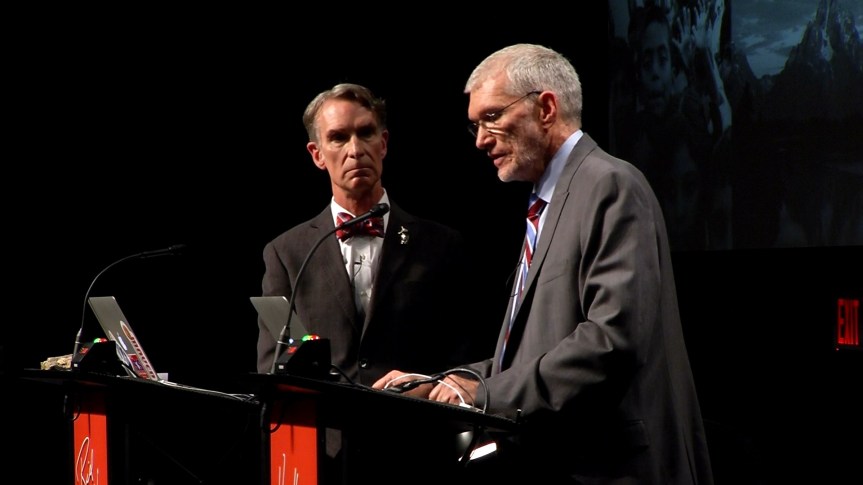
Featured image: Famed science advocate Bill Nye debates creationist Ken Ham on evolution in one of the most watched scientific debates in recent memory. (Courtesy NBC)

In this final show of the year, Matt Grobis (a regular guest and graduate student in EEB) comes on to talk through the urgent topic of public outreach by scientists. In a media landscape where evidence doesn’t always count, how can scientists defend their research to taxpayers and the government? Can we accurately gauge public understanding of science, and whether the public is divided over our research? Finally, we contemplate echo chambers in society and the accusation that the scientific community itself is an echo chamber.

On top of that, listen for yogurt science, holiday/science events, and an overview of some of this year’s biggest discoveries: from gravity waves to the superparticle that wasn’t, to new prime numbers, planets and moons.

Thanks for listening to These Vibes Are Too Cosmic all through 2016! It’s our goal to keep up the quality science news and entertainment through the exciting discoveries of 2017. Never hesitate to contact us with show ideas if you have them!

For further information:

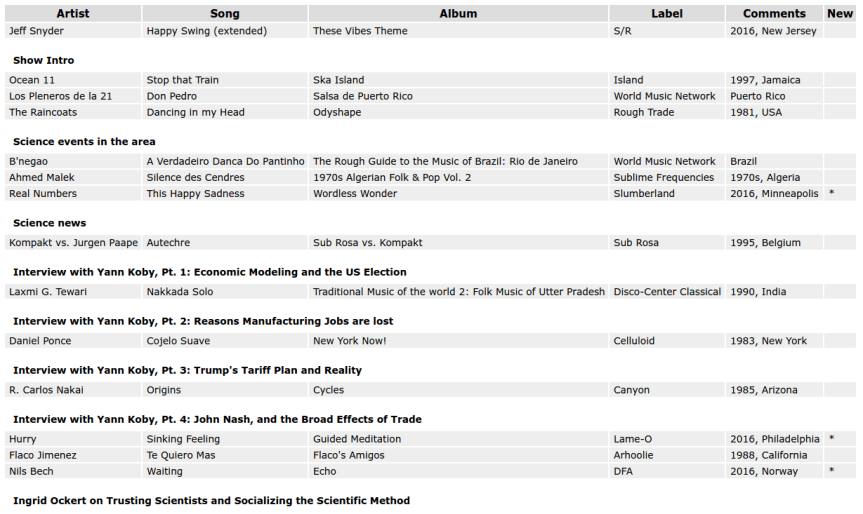
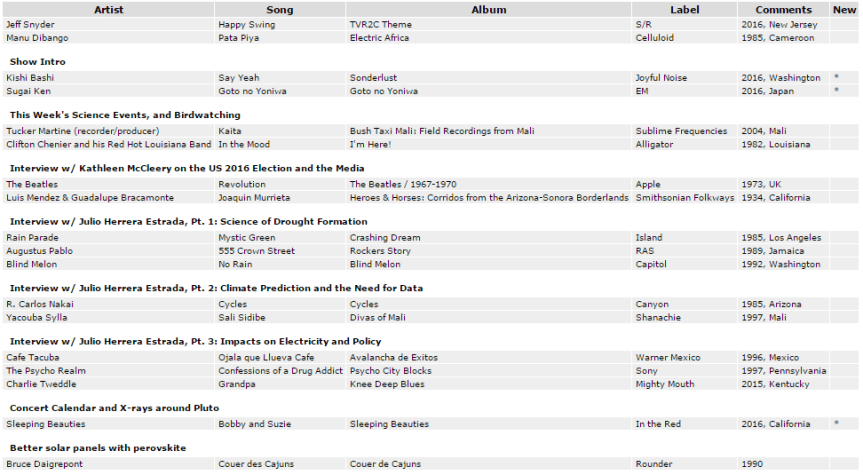
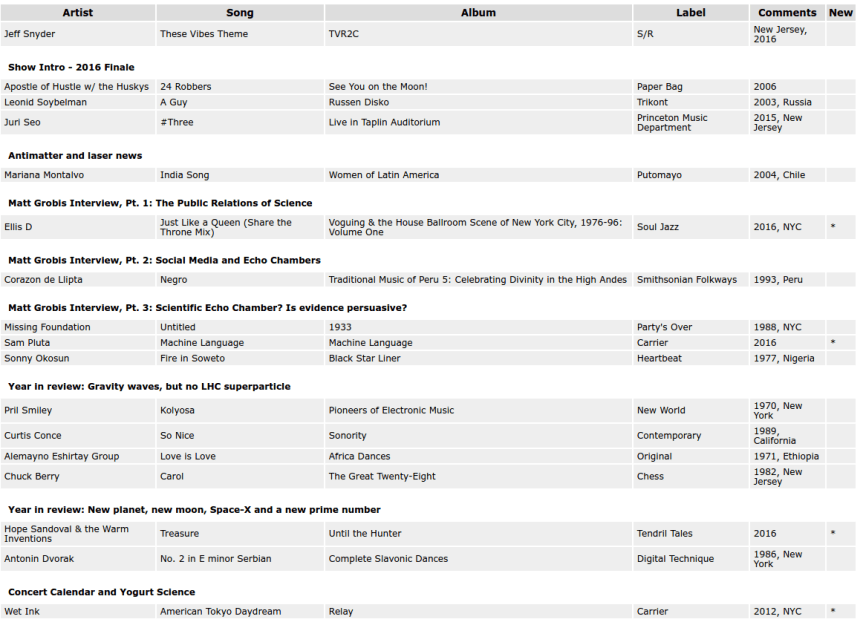
The playlist for the show is online at WPRB.com or below.
tvr2c_playlist122016


12/13/16 Show feat. Thomas Macrina on Connectomes and Kasey Wagoner on the Equivalence Principle

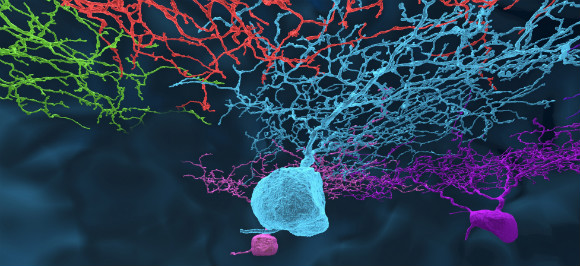
Featured image is from Eyewire the connectome project run by Sebastian Seung at Princeton University.

Image in the Mixcloud embed above is from the Human Connectome Project at the University of Southern California.

This show is a little different. The plan was to have author and professor Patrick Phillips on for the first hour, alas there had to be a rescheduling at the last minute. Instead we will be interviewing Patrick Phillips on his book Blood at the Root at the end of next month (January 2017), so stay tuned.

Hour 1: Lots of music and some science news, including self-driving cars.
Hour 2: Thomas Macrina on machine learning, neuroscience, and mapping our brain – our connectome.
Hour 3: Kasey Wagoner, lecturer in physics at Princeton, on the bedrock scientific principle called the Equivalence Principle. In this discussion, Kasey tells us about the history, the principle’s importance, and current tests.


screen-shot-2016-12-16-at-10-12-22-am


12/6/16 Show feat. Yann Koby on trade economics and the US election + Ingrid on trusting scientists

ChinaShipping2-772536.jpg

Featured image: a cargo ship, ferrying a pile of our everyday goods across the Pacific Ocean. Increases in ship traffic attracted the attention of Eric Stone, photographer.

This week, Yann Koby of Princeton’s Department of Economics comes on the air, focusing on the economics of the US manufacturing sector. We examine economic modeling and prediction, especially concerning the flow of jobs in and out of the US due to trade with other countries. How do trade policies between large nations affect the structure of our economy? How does job availability in the US affect politics? Specifically, Yann theorized about the recent election: Trump bet his candidacy on the connection between globalization and jobs. Was he right that increased trade put Americans out of work? What effects on the US and world economy might we expect out of the upcoming administration? Listen in to the interview (starting an hour in to the recording) to find out!

Later in the show, regular guest Ingrid Ockert reviews a lecture series by Naomi Oreskes on scientists as Merchants of Doubt. When have scientists peddled misinformation, and when should we trust them?

Other relevant info and background:

  • Yann Koby maintains a blog, visible here (some articles are in English!).
  • Solar panels have broken even, making as much energy as it’s cost to produce them for decades.
  • We’ve long theorized about dark matter, but have never seen it. Some suspect it might not exist at all – hear Stevie’s careful analysis in the show.
  • Genetic engineering is making plants grow faster – demonstrated in tobacco but useful for fighting worldwide hunger.

The full playlist is online at WPRB.com or below.

tvr2c_playlist_120616.png

11/22/16 Show feat. Lian Zhu on cellular engineering and optogenetics + Harrison on Blood Falls glacier

hela-cells-fluorescence.jpg

Featured image: HeLa cells, all derived from one human, being imaged with fluorescence. Proteins tagged with light-sensitive tails travel through the cell. (courtesy NIH)

This week, I’m happy to have interviewed Lian Zhu, a Princeton PhD candidate in Chemical and Biological Engineering. Her fascinating research on the cell’s nucleolus will bring us through the science of RNA creation and how cell parts can exist without membranes. She’ll explain how light can engineer cellular dynamics, and how she’s used this optogenetics technique to stiffen or loosen various proteins inside the cell nucleus–a feat which mimics the cell’s own formation and dissociation of globs inside the nucleus. Track proteins and affect their motion with light: it’s a hands-on way to look inside the cell! Her interview starts an hour into the track above.

As an added bonus, Lian shared this video of cells inside a worm egg dividing until they form a multicellular animal – and she’s seen this happen under a microscope with her own eyes.

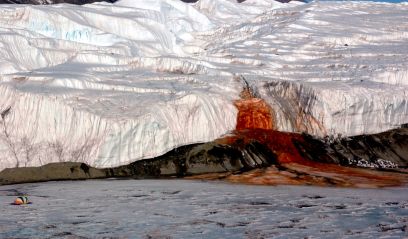
Preceding the main interview (0:40 on the recording), Harrison Blackman covers the rust-red Blood Falls, an Antarctic glacier whose bacteria produced a horror-movie set. Afterwards, we share science news about space telescopes and craters on Earth, and the whole show features music from all over the Middle East for flavor. Enjoy!

blood_falls
The Blood Falls glacier in Antarctica.

Relevant links:

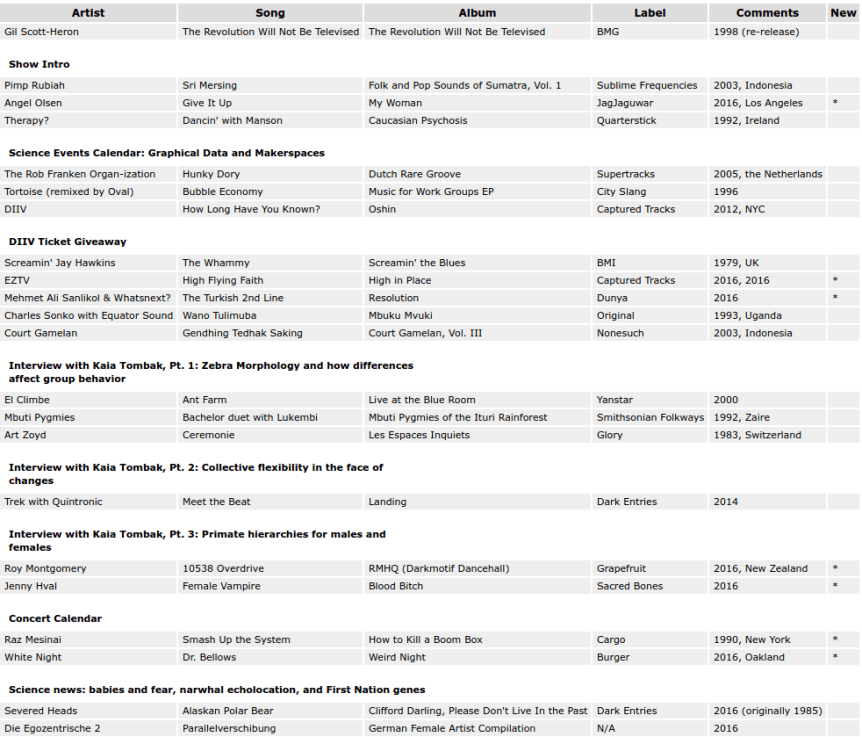
See our event calendar for upcoming events, and check out the playlist for the show at WPRB.com or below.

TVR2C_playlist_112216.png


11/15/16 Show feat. Kaia Tombak on group adaptation and animal hierarchies

grevys-zebra_gallery_1.jpg

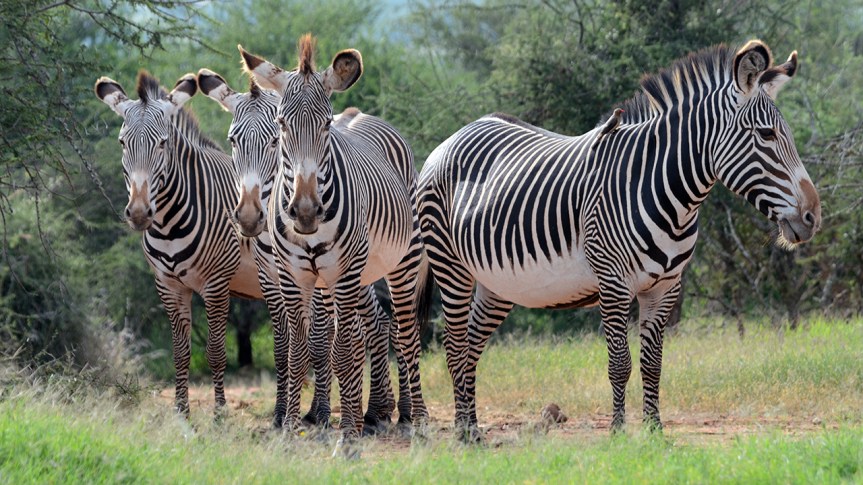
Featured image: A small group of Grevy’s zebras, which might remain together to avoid predators or split apart to find more food for themselves. (Courtesy M. F. Kinnaird)

Kaia Tombak of Princeton’s Ecology and Evolutionary Biology Department was on mic this week to share her expertise on collective behavior in animals. How are groups of animals structured? What environmental factors influence social flexibility in a herd? Kaia studies these questions about group dynamics where two species of zebras co-exist in the Kenyan

fig1-RedColobusChapman.jpg
A Ugandan red colobus. (Atlas of Science)

savannah, looking at the impact a few genetic differences have on collective behavior. Later, we discuss hierarchies in primate species: how egalitarian are male and female groups? All this, plus stories of running from elephants and a smattering of science news, can be found in this week’s show.

Check out the interview beginning an hour into the show above, and in the meantime here’s some relevant background:

  • Narwhals have amazing abilities of echolocation for finding their way around the Arctic.
  • Of all the emotions, babies have the strongest neurological connection with fear.
  • We now have genetic evidence that European colonization of the Americas uprooted the  immune systems of Native Americans.
  • Kaia’s research goes way beyond Africa: here she is diving with sharks and lasers.

Thanks for listening! The playlist is online at WPRB.com or below.
TVR2C_playlist_111616.png

11/8/16 Show feat. Julio Herrera Estrada on droughts and policy + Kathleen McCleery on the US election

highPressureSystemTasmania.jpg

Featured image: A high-pressure system over Tasmania, which pushes moist air away from a region and can cause droughts (even over the ocean!). (Courtesy NASA).

This week’s episode features Julio Herrera Estrada, Princeton PhD candidate in Civil and Environmental Engineering (his interview starts an hour into the show). As an expert on drought formation and prediction, Julio told us how to model long-term climate patterns and how interactions between land and air can lead to severe weather. Withstanding severe droughts requires connecting science and policy, so we explore what developed and developing countries can do to mitigate risks.

Additionally in this Election Day special, we spoke with Kathleen McCleery, visiting Ferris journalist, producer for PBS NewsHour, and WPRB alumnus on her understanding of this year’s US election. From demographics to the voracious news cycle that forgets as fast as we feed it, we pondered the influence that the media can have on the election and vice versa. You can hear it starting 30 minutes into the broadcast.

For other science news, check out the following links:

  • Perovskite solar cells promise to be cheap and efficient, thanks to nanomaterial engineering.
  • X-rays from the haze around Pluto might indicate a bigger atmosphere than we thought possible, and suggest that other dwarf planets might emit X-rays too.

The playlist can be found on WPRB.com or below.

TVR2C_playlist_110816.png

11/1/16 Show feat. Sébastien Phillipe on nuclear arms verification and disarmament, plus the physics of baseball and how the Columbia peace deal is affecting ecologists

Zero-knowledge object-comparison set-up. In our discussion with Sébastien Phillipe, these are the “detectors” filled with flourocarbon droplets floating in gel. (What bubbles when hit by neutrons.) Image Credit: (c) Nuclear Futures Laboratory

¡¡Currently having trouble embedding the Mixcloud stream. In the mean time you can listen here.!!

Pt 1: Introduction to the show and the physics of baseball with Kasey Wagoner, lecturer in physics at Princeton University and member of the Atacama Cosmology Telescope collaboration. Kasey described the physics behind the curve in the curveball, and why knuckleballs are so hard to hit (and catch). Additionally, there’s a physical explanation for what baseball players call the “sweet spot” on a bat.

Pt 2 (at 1 hour in): Interview with Sébastien Phillipe, graduate researcher in applied physics and member of the Nuclear Futures Laboratory at Princeton University. Sébastien

sebastien_philippe_nfl
Sébastien Phillipe

is an expert in the topics of nuclear weapons non-proliferation, arms control, and disarmament. We discussed his dissertation research on an experimental setup to make use of something called the “zero knowledge proof” to solve an acute problem in nuclear disarmament — verification. Listen in to learn more.*

This interview was a kind of part 2 to our earlier interview with Julien de Lanversin on nuclear energy, arms, and policy. That show would provide good background on this interview with Sébastien, but it’s necessary. I highly recommend giving it a listen.

For further reading, in the show we mention a New Yorker article featuring Sébastien Phillipe and his graduate adviser, Professor Alex Glaser. Though we had trouble with the analogy for the zero knowledge proof that was used in the piece, it’s a great article.

Additionally, Stevie mentions a recent NPR piece on the current state of US-Russia relations which is relevant to these discussions on nuclear arms and verification.

Pt 3 (2.5 hours in): Brief interview with Lizzie Wade, Latin America correspondent for Science magazine, discussing her recent piece on how the Colombia peace deal affects ecologists and biologist who wish to study the nation’s biodiverse countryside. (Unfortunately, the article is behind a paywall, but if you happen to be a subscriber, you should be able to find it by looking for “Colombia peace deal blow dismays ecologists.”)

Trust, but verify.


screen-shot-2016-11-01-at-10-53-58-pm

10/25/16 Show feat. Beena Sarwar on peace and the media + Charles & Eugene on open source inventions

protestIndia.jpg

Featured image: Protests in India about women’s rights have taken center stage in Western news recently, but mainstream media often emphasizes the louder news: aggression and war, instead of the peace process. (courtesy WBUR)

Thanks to guest Beena Sarwar, Pakistani media expert and visiting Ferris journalist at Princeton, for a deep look into why the media functions as it does. She speaks on how the personal is political in a repressive system, the media’s ideal role in society (and how its operation as a business corrupts this role), and the hypernationalism of nuclear proliferation in Southeast Asia. It’s stunning and entertaining stuff, so tune in starting about an hour in!

In the broadcast’s third hour, we jump to open source software and its values. Eugene Evans and Charles Swanson, plasma physics PhD candidates at Princeton, join us to talk about their own inventions with open source technology: homemade 3D printers, startups for VoIP systems, and more!

Check out this background for more information:

The playlist can be found at WPRB.com or below.

tvr2c_102516playlist

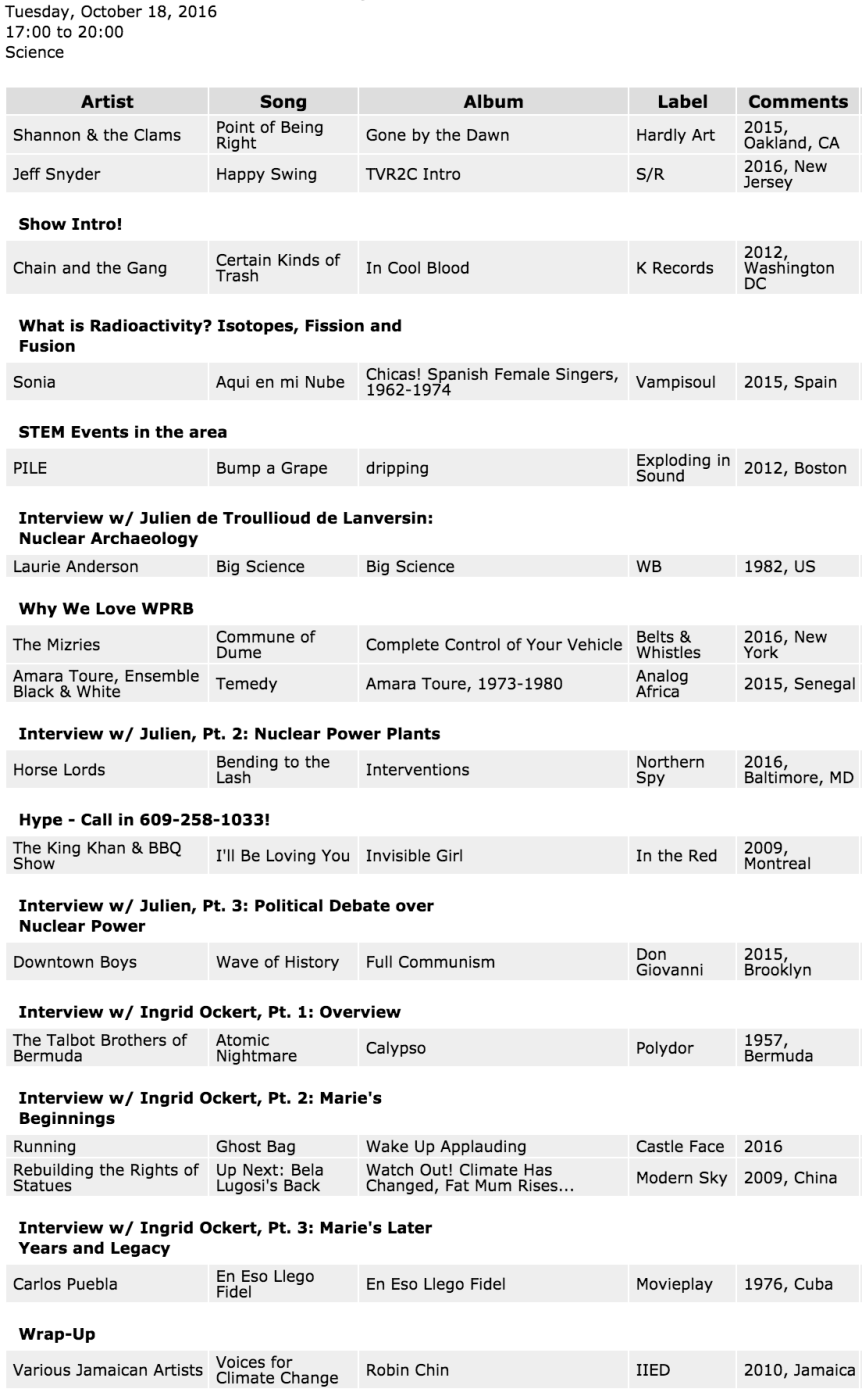
10/18/16 WPRB Pledge Drive Show feat. Julien de Lanversin on nuclear energy and science + Ingrid Ockert on Marie Curie and the discovery of radioactivity

This was These Vibes Are Too Cosmic’s radioactive WPRB pledge drive show! Once a year, WPRB takes a week to raise money for the station – and make our entire operating budget for the year. (WPRB lives at Princeton University, but is an independent station – Princeton only donates the space.) If you’re seeing this, you (probably) can still donate! Just go to pledge.wprb.com.

Here’s the show:

Part 1: Introduction, Brian & Stevie provide a kind of primer on the science of radioactivity and announce some science events in the area.

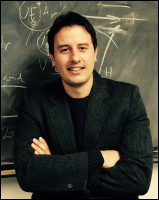
Part 2 (40 minutes in): Interview with Julien de Lanversin, researcher with the Nuclear

screen-shot-2016-10-19-at-7-02-38-pm
Julien de Lanversin

Futures Laboratory at Princeton University. Our discussion centered around nuclear energy, disarmament, and nuclear archaeology. We discuss both the science involved, and the global security policy. Towards the end of the segment, Julien explains how a nuclear power plant converts Uranium-235 fuel to energy, and the key points of the Iran nuclear deal.

Part 3 (2 hours in): Brian and Ingrid Ockert discuss the life of Marie Curie and the history of the discovery of radioactivity!


screen-shot-2016-10-19-at-7-06-15-pm

10/11/16 Show feat. Erik Walker & Bill Collins of Climate Music Project + Matteo Ippoliti on topological insulators

climateModel.jpg

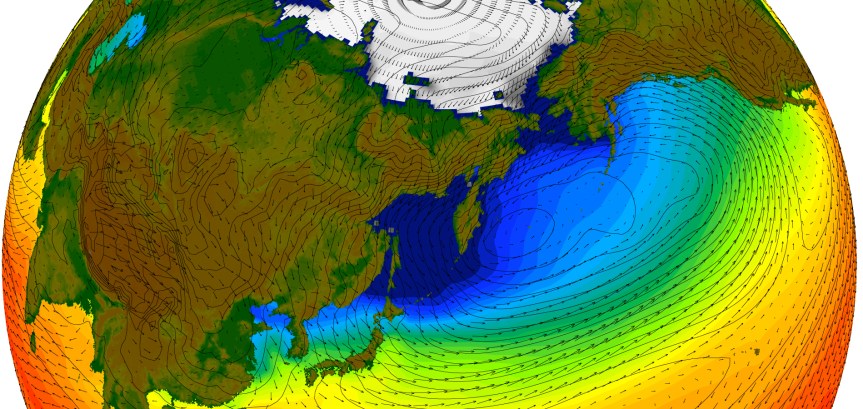
Featured image: A climate change model from Boulder, CO, predicting air flows and temperatures in a wide range of climate-change scenarios. (courtesy Atmos News)

Double interview on These Vibes tonight! We started the show with Matteo Ippoliti, Princeton graduate student in physics, who explained the Nobel-winning concepts of his academic advisor Duncan Haldane–all the way from spin arrays to quantum computing.

At 6:00, composer Erik Walker and climate prediction expert Bill Collins called in from San Francisco to cover their recent collaboration: the Climate Music Project. This joining of arts and sciences writes climate change into the pace of a composition. For example, temperature forces the piece’s tempo to change, increased solar radiation leads to distortion, and so forth. Hear the pair dive into climate modeling accuracy and the public’s reaction to their collaboration.

The whole show is dotted, of course, with science news and music of all kinds. Check out the resources below:

Find the playlist below, or at WPRB.com.

playlist_101116.png